
Wire Conveyor Belting
Metal wire conveyor belts engineered for extreme temperatures, demanding processing environments, and long service life, from food production and baking to mining and high-temperature industrial applications.


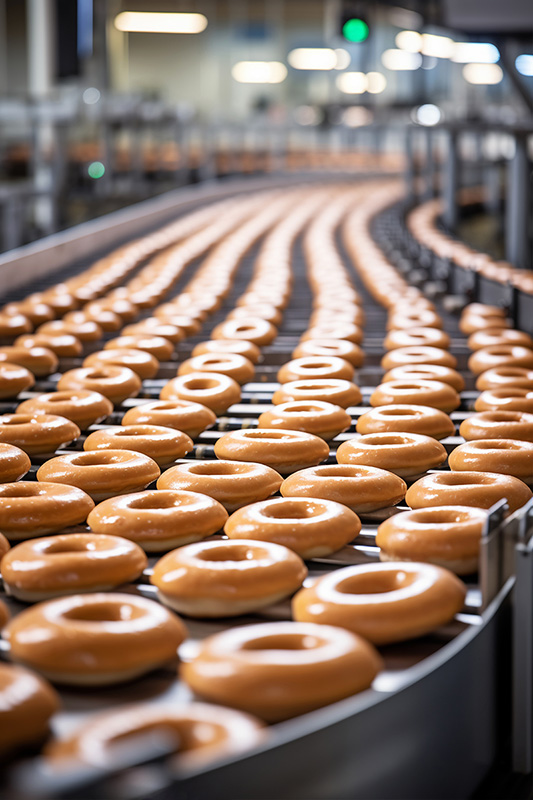

comprehensive range of wire conveyor belting across South Africa
Wire conveyor belts are the product of choice wherever conventional rubber or fabric belts reach their limits. Designed to withstand temperatures ranging from -50°C to 1100°C, wire belts deliver reliable, continuous performance in some of the most demanding processing environments in industry. Their open mesh structure allows free passage of air, steam, heat, water, and light, making them as useful in a food processing plant as in a mining operation or industrial furnace.
Meshcape Industries supplies a comprehensive range of wire conveyor belting across South Africa, with access to multiple belt constructions and materials to suit the specific demands of your application. We also offer guidance on belt specification, drive type selection, and installation to ensure your belt performs as intended from day one.
Why Use a Wire Belt?
The performance advantages of wire belting are directly linked to how it is made. Metal construction, open mesh geometry, and the ability to specify the right alloy for your environment combine to produce a belt that outperforms rubber and fabric alternatives across a wide range of demanding applications.
Extreme temperature range
Wire belts operate reliably from -50°C to 1100°C — far beyond the capability of any rubber or fabric belt.
Corrosion resistance
When specified in the correct material, wire belts resist the corrosive effects of process chemicals, steam, and moisture.
Open mesh structure
The open weave allows drainage of liquids, free passage of hot or cold air, and steam penetration — essential in cooking, drying, freezing, and washing applications.
Strength and durability
Good tensile strength and strength-to-weight ratio ensures a long service life even under continuous operational stress.
Process compatibility
Wire belts can carry products through ovens, furnaces, freezers, washers, and dryers without degradation.
Custom construction
Belt construction can be tailored to your specific application where standard constructions are not sufficient.
Belt Constructions
We supply wire conveyor belts in a range of constructions, each suited to different applications and conveyor configurations:
Balanced Weave
The most popular wire belt construction. Built by joining left-hand and right-hand coil spirals with a crimped or straight cross rod, the balanced weave allows the tension in opposing coils to cancel each other out in operation. This reduces the tendency of the belt to creep sideways on the conveyor track. Good tensile strength and open area make this the standard choice for most general conveying applications.
Double Balanced Weave
Similar to balanced weave but constructed with pairs of alternating left and right hand coils. The result is a belt with a relatively smooth surface and excellent tracking characteristics, well suited to applications where product stability on the belt surface is important.
Flat Spiral Weave
Constructed in the same way as balanced weave but with more closely wound coil wires, requiring straight cross rods. The tighter construction produces a denser belt surface, suited to applications where the open area of standard balanced weave is too large for the product being carried.
Cord Weave
Coil spirals fitted very closely together and joined by multiple cross rod wires. The resulting close mesh and smooth flat surface make cord weave belts ideal for carrying very small products that might otherwise fall through or become lodged in a more open belt construction.
Duplex Weave
Manufactured from pairs of coil spirals of the same hand, either both left or both right, with large diameter wires set close together. The heavy construction and good mechanical strength of the Duplex weave make it the preferred choice for high-temperature furnace applications where durability under extreme heat is the primary requirement.
Honeycomb Belt
Manufactured from flat steel strip rather than wire, the Honeycomb belt’s open mesh design makes it ideally suited for handling products that require washing, stoving, heating, cooking, drying, or sterilising. The smooth surface and open structure allow thorough product treatment while maintaining positive conveying.
Drive Systems
Wire conveyor belts are compatible with two main drive systems: friction drive and chain drive. The correct drive system depends on your conveyor length, load, operating temperature, and belt construction. Our team can advise on the appropriate drive arrangement for your application.
Materials
Wire conveyor belts are available in materials selected to suit your operating environment and process requirements:
Carbon Steel
For general industrial applications at moderate temperatures.
Galvanised Steel
For applications involving moisture or mild corrosive conditions.
Stainless Steel AISI 304 and 316
The preferred choice for food processing, baking, washing, and hygienic applications.
Specialist alloys
Available on request for extreme temperature or aggressive chemical environments.

Not Sure What You Need?
With over 100 years of combined experience, our team brings proven expertise across a wide range of applications. Tell us what you are trying to achieve and we will recommend the right product for the job.